Tabula Rasa, 2011
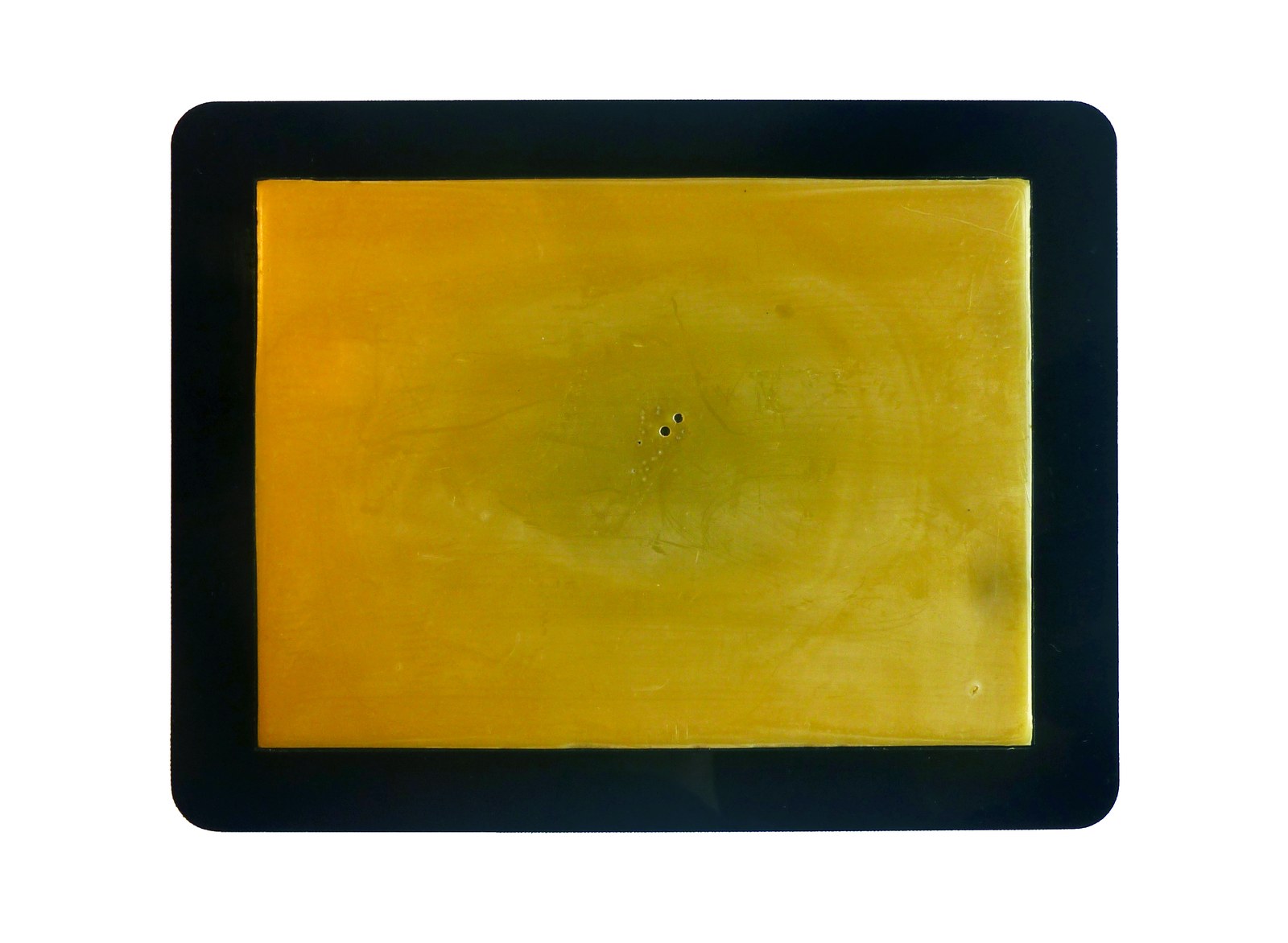
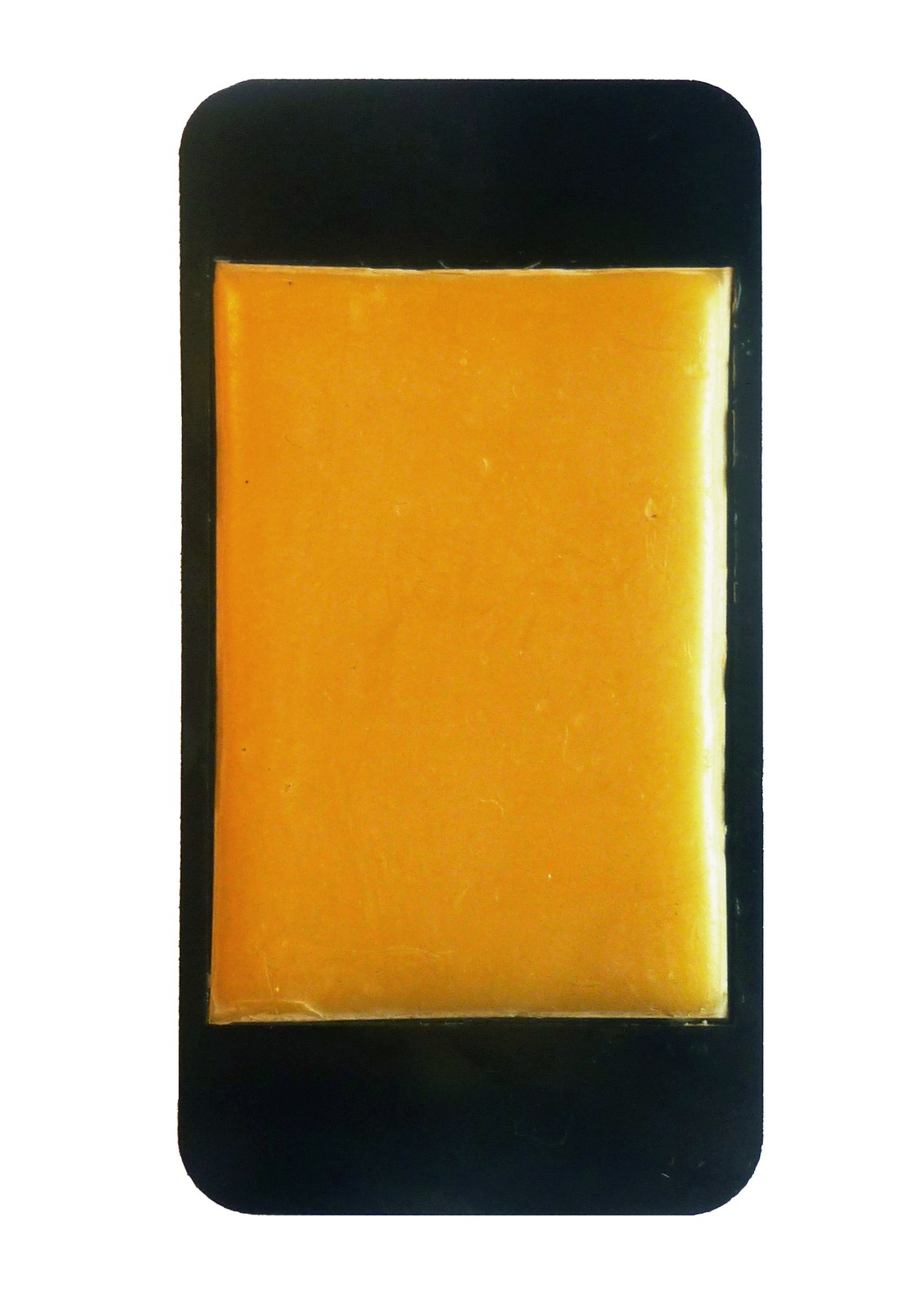
Deux objets aux dimensions d'un iPhone 4S (115 × 59 mm) et d'un iPad 2 (241 × 186 mm)Two objects at the dimensions of an iPhone 4S (115 × 59 mm) and an iPad 2 (241 × 186 mm)
Deux objets noirs, aux dimensions exactes d'un iPad et d'un iPhone, usinés dans du plexiglas. À l'emplacement de l'écran, une plaque de cire d'abeille jaune. Le geste tient en une substitution : là où brillait la dalle tactile, une surface molle et mate, où l'on pourrait inscrire à la pointe.
L'appareil le plus récent rejoint alors le plus ancien des supports d'écriture, la tablette de cire des scribes, que l'on grattait pour recommencer. Tabula rasa : la table rase, mais aussi la tablette vierge — le même mot pour l'outil de pointe et pour son ancêtre effaçable.
Privé de son écran, le téléphone cesse d'afficher pour redevenir une matière à marquer. L'objet de consommation, réduit à sa silhouette et rendu à un geste manuel, expose d'un coup son obsolescence et la longue mémoire des supports qu'il prétend rendre caducs.
Two black objects, machined from Plexiglas to the exact dimensions of an iPad and an iPhone. Where the screen would be, a plate of yellow beeswax. The gesture is a single substitution: where the touchscreen once shone, a soft matt surface, one you could inscribe with a point.
The most recent device thus meets the oldest of writing supports, the scribes' wax tablet, scraped clean to begin again. Tabula rasa: the blank slate, but also the blank tablet — one phrase for the cutting-edge tool and for its erasable ancestor.
Stripped of its screen, the phone stops displaying and becomes, once more, a matter to be marked. The consumer object, reduced to its silhouette and returned to a hand's gesture, lays bare at once its obsolescence and the long memory of the supports it claims to render obsolete.