
Tableau (paysage)Painting (Landscape), 2010
Vidéo d'écran, Google Street View
Diffusion en boucle sur moniteurScreen footage, Google Street View
Looped, monitor
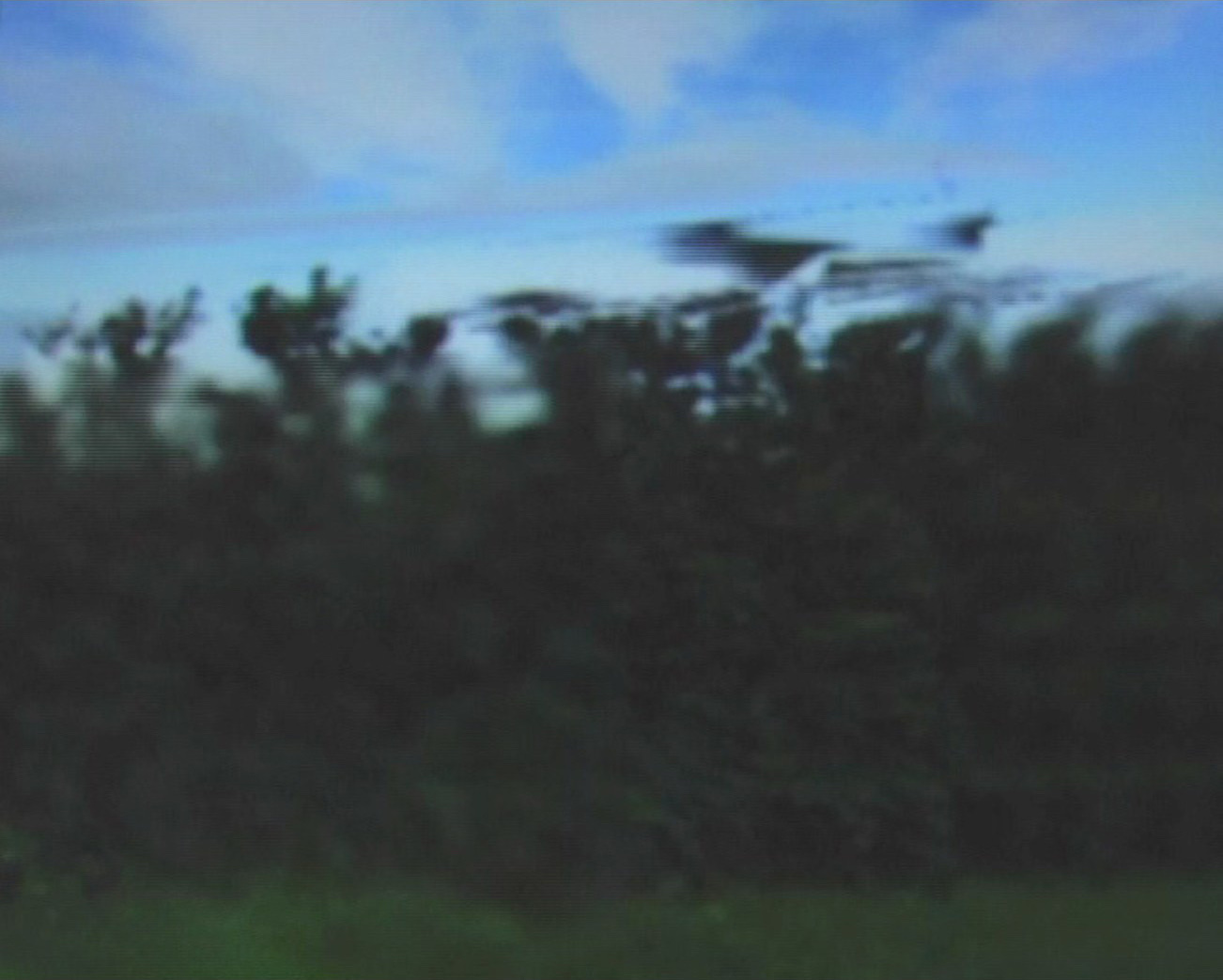
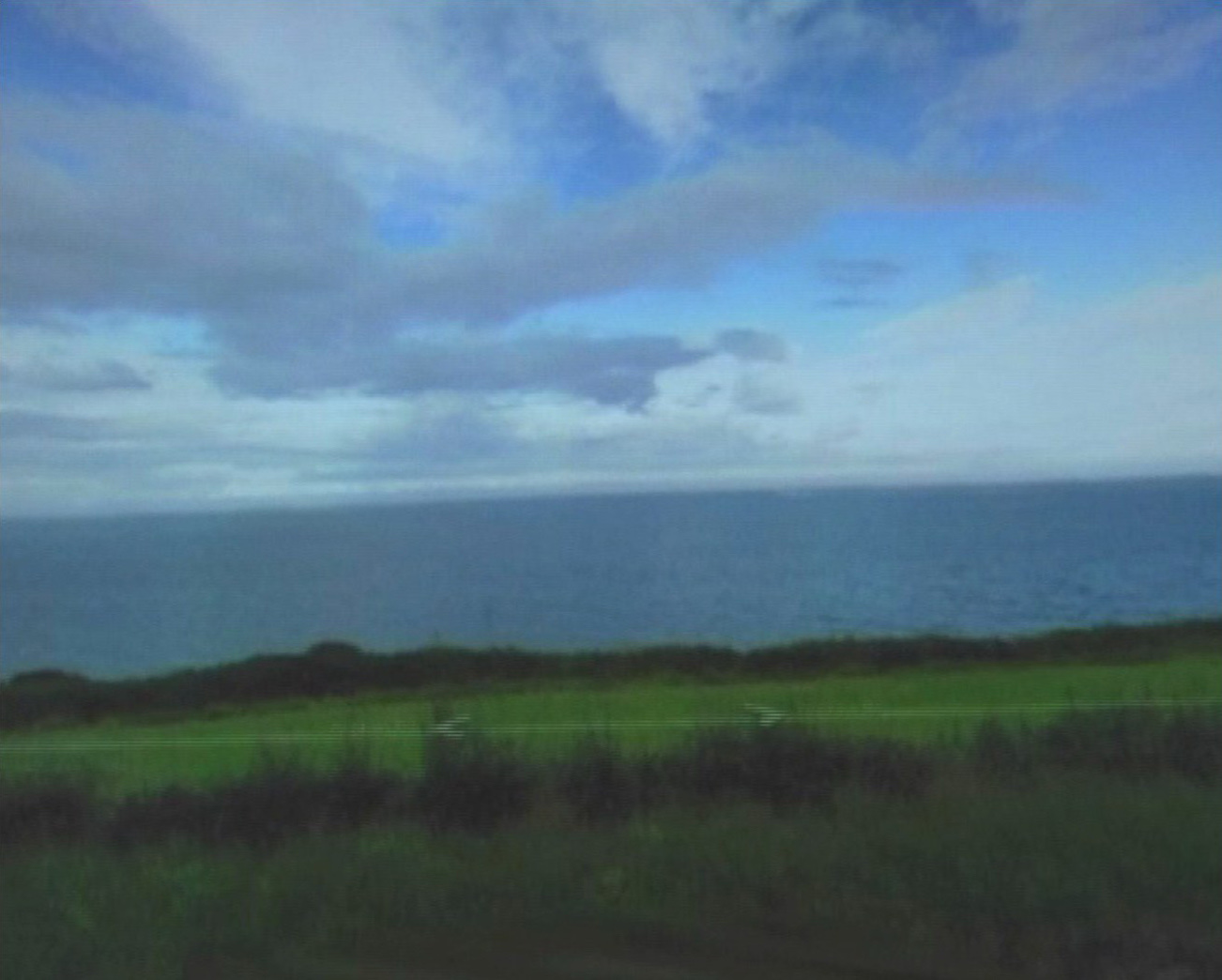
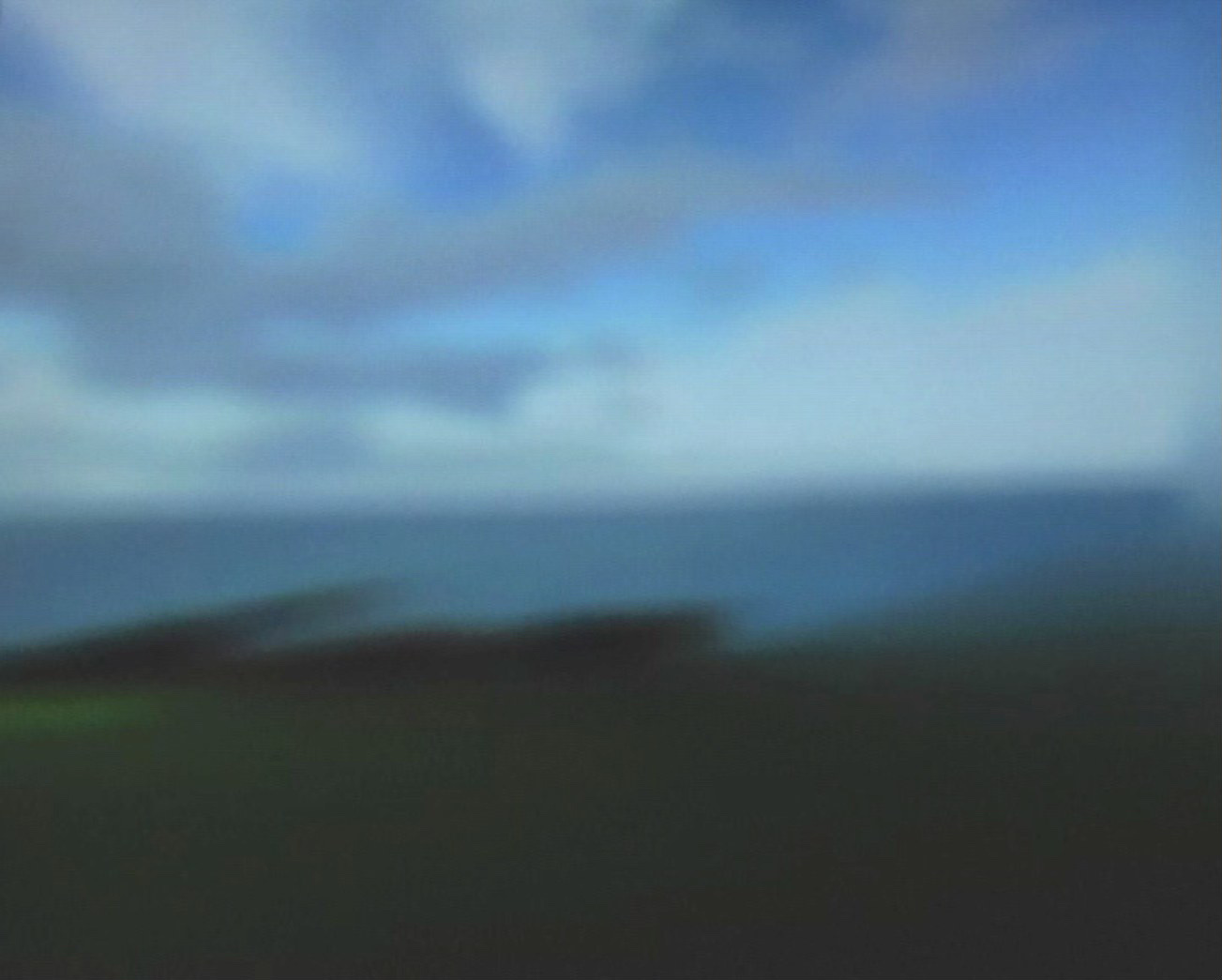
Une petite route goudronnée de campagne, au bord de l'océan. En contrebas, la mer : une étendue pâle, prise entre le vert dense des bosquets et un ciel de nuages bas. La vue avance latéralement le long de la route, puis revient en arrière, indéfiniment, sur la même portion de paysage. Par moments un buisson obstrue tout ; il penche en diagonale, couché par l'obturateur de la voiture qui l'a photographié en roulant.
Rien n'a été tourné. Le paysage est un relevé automatique de Google Street View, filmé à la caméra mini DV directement sur l'écran de l'ordinateur. Le mouvement de l'interface est conservé, avec ses ratés — l'étirement, la couture entre deux instants photographiés à des heures différentes, la netteté perdue puis retrouvée. Le ratage est la matière.
Car ce que rend l'appareil de cartographie le plus avancé du monde, ce sont exactement les effets d'une peinture ancienne : flou, sfumato, glissement des masses colorées, horizon incertain. Le grain de la mini DV achève de rendre l'image picturale. Et le format presque carré du quatre tiers n'est pas celui de l'écran : c'est celui d'un châssis.
Ce relevé n'est pas une carte, c'est un tableau. Le sublime revient par l'artefact. Un voyage immobile, depuis un bureau, dans une base de données — et le romantisme du paysage réapparaît là où plus personne ne l'attendait.
A small tarmac country road, running along the coast. Below it, the sea: a pale expanse caught between the dense green of the thickets and a low, clouded sky. The view moves laterally along the road, then comes back, endlessly, over the same stretch of landscape. Now and then a bush blocks everything; it leans on the diagonal, tipped over by the shutter of the car that photographed it on the move.
Nothing was shot. The landscape is an automated survey lifted from Google Street View, filmed with a mini DV camera pointed straight at the computer screen. The movement of the interface is kept, with its failures — the stretch, the seam between two moments photographed hours apart, focus lost and recovered. The failure is the material.
Because what the most advanced mapping machine on earth returns is, exactly, the repertoire of an old painting: blur, sfumato, drifting masses of colour, an uncertain horizon. The grain of mini DV finishes the job. And the almost square four-thirds format is not that of the screen: it is that of a stretcher.
This survey is not a map, it is a painting. The sublime comes back through the artefact. A journey made without leaving the desk, inside a database — and the romanticism of landscape reappears where nobody was expecting it any more.