Sculpture (outil)Sculpture (Tool), 2010
Cube de 50 cm de côté, manche en bois de 90 cmCube 50 cm per side, wooden handle 90 cm
300 kg300 kg
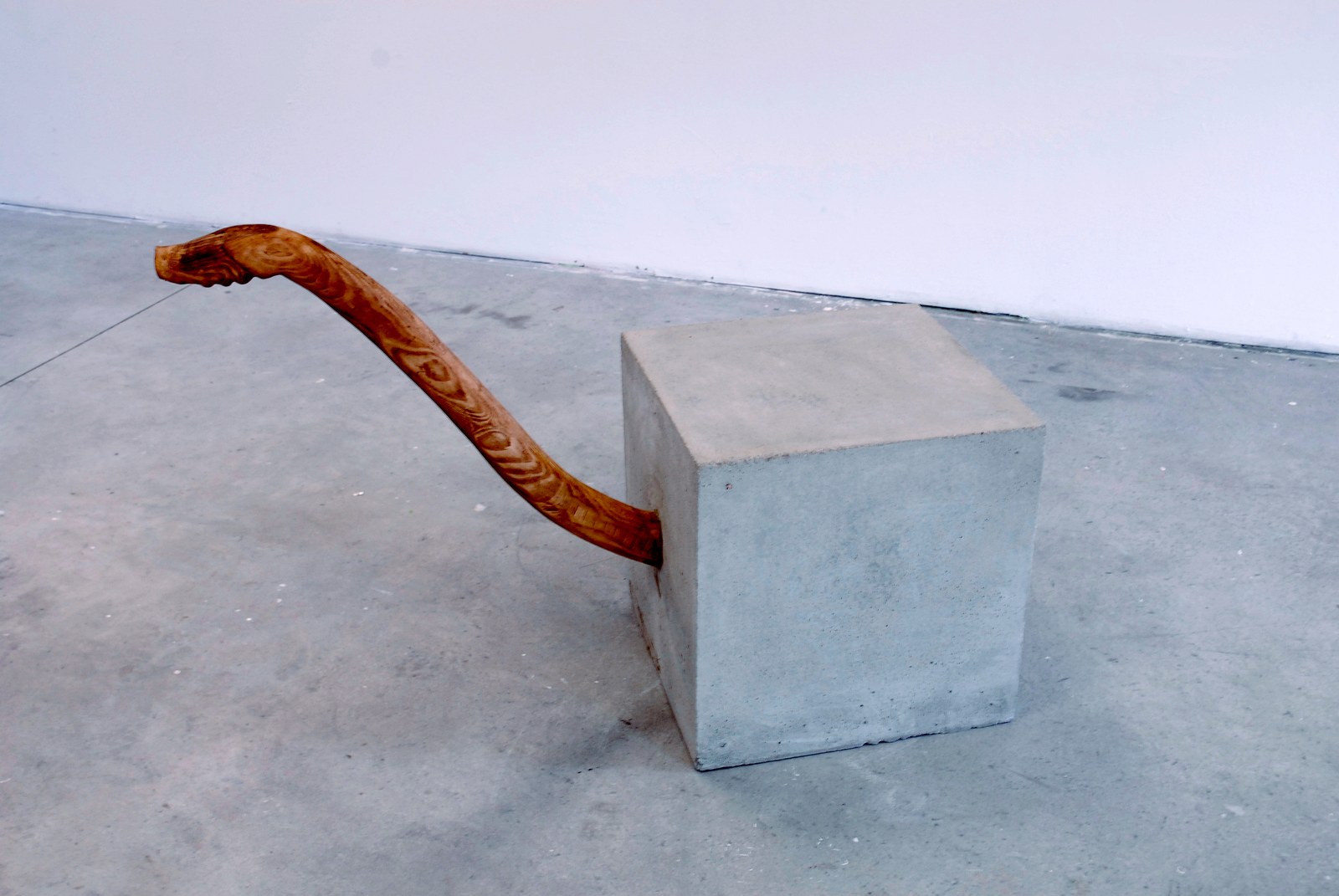
Un cube de béton de cinquante centimètres de côté est posé à même le sol de la salle, sans socle. Un manche de pin ciré y est fiché : il traverse une face, se déploie dans l'espace en une longue courbe qui redescend vers le sol.
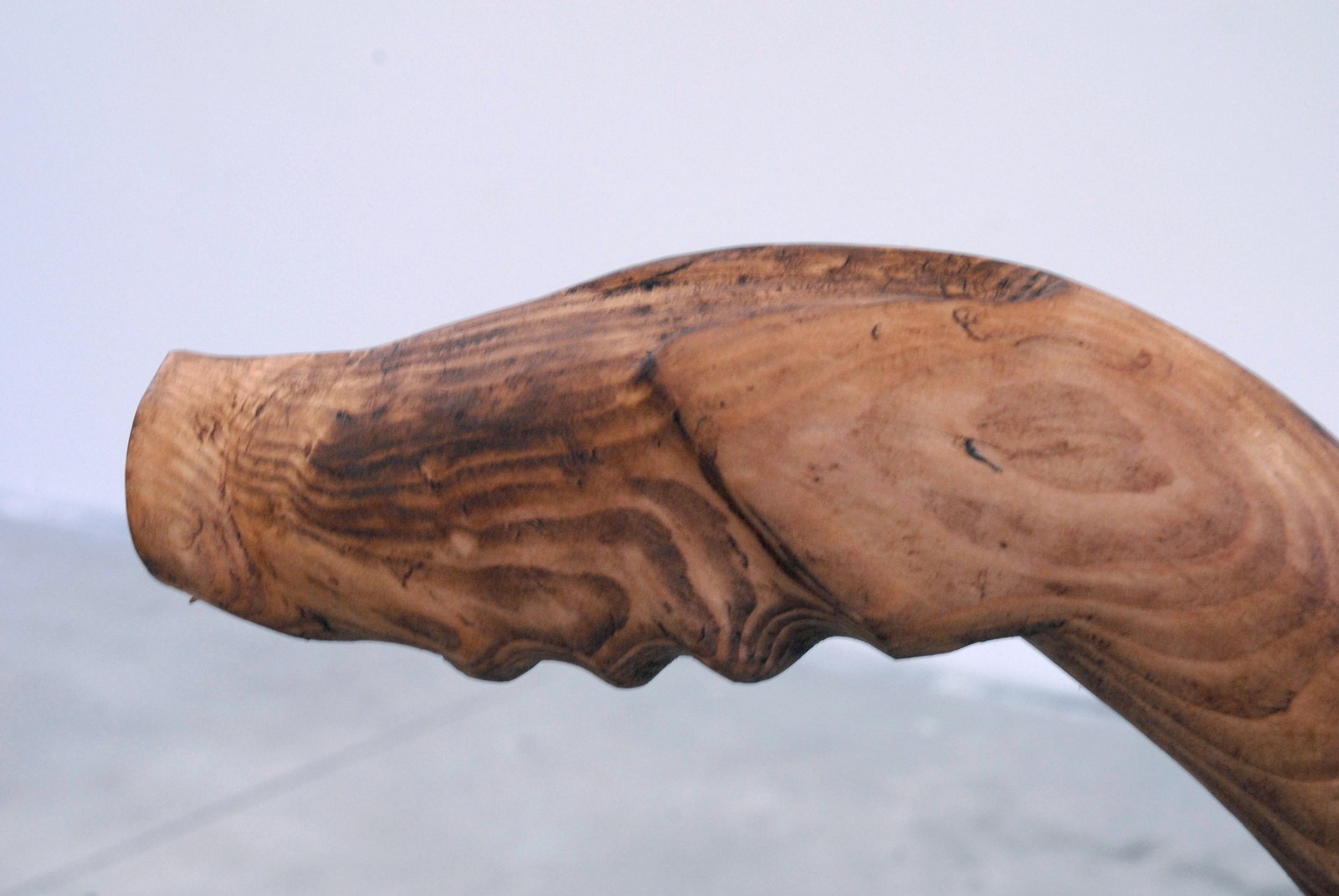
Le regard va au manche, et le corps suit avant toute réflexion. La courbe se présente de profil, à la hauteur d'une main qui pend. Son extrémité est creusée aux dimensions exactes d'une paume et de quatre doigts. Ce creux offre une prise taillée pour être occupée. Rien dans l'objet n'est plus explicite que cette invitation à s'en saisir.
Ce que le manche invite, la masse le refuse. Le pin est poli et ciré pour la main ; les trois cents kilos de béton armé sont coulés pour ne pas bouger. L'outil, qui d'ordinaire étend la portée du corps, n'ajoute ici qu'un poids. La poignée reste parfaitement utilisable : c'est l'usage qui semble n'aboutir à rien.
Mais la résistance renseigne. À tirer, ou même à seulement estimer du regard ce qu'il faudrait pour tirer, on prend la mesure de sa propre force, de sa taille, de ses appuis. Reste alors une question que la main pose mieux que l'œil : la perception a-t-elle lieu dans la paume qui serre, ou à l'autre bout du manche, là où l'outil prolonge le corps ?
A concrete cube fifty centimetres on each side sits straight on the floor of the room, without a plinth. A waxed pine handle is driven into it: it passes through one face and unfolds into the space in a long curve that comes back down towards the ground.
The eye goes to the handle, and the body follows before any thought. The curve presents itself in profile, at the height of a hanging hand. Its end is hollowed to the exact dimensions of a palm and four fingers. That hollow offers a grip cut to be occupied. Nothing in the object is more explicit than this invitation to take hold of it.
What the handle invites, the mass refuses. The pine is polished and waxed for the hand; the three hundred kilos of reinforced concrete are cast not to move. A tool ordinarily extends the reach of the body; here it adds only weight. The grip stays perfectly usable: it is the use that seems to lead nowhere.
But resistance informs. In pulling — or merely in gauging by eye what pulling would take — you take the measure of your own strength, your height, your footing. What remains is a question the hand puts better than the eye: does perception take place in the palm that grips, or at the far end of the handle, where the tool extends the body?