
La cantatrice réclaméeThe Advertised Soprano, 2011
Vidéo numérique, montage 15 min, couleur, son direct
Avec Flavie Marcon, chant lyriqueDigital video, 15 min edit, colour, direct sound
With Flavie Marcon, operatic voice
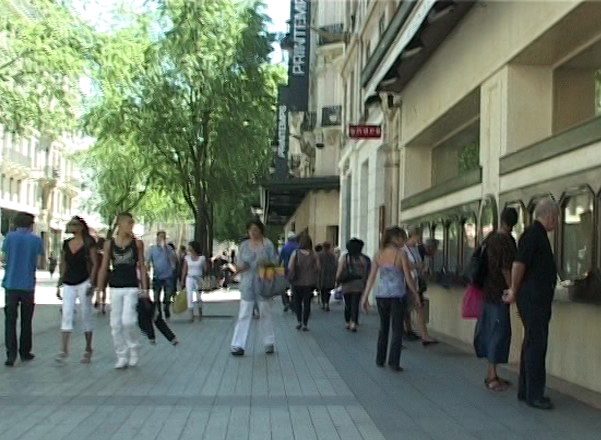
Une chanteuse lyrique, Flavie Marcon, traverse le centre-ville de Lyon un jour d'affluence. Tout ce que son regard croise d'écrit sur les murs et les panneaux d'affichage, elle le chante : slogans, marques, promotions, affiches, enseignes. À pleine voix, en technique lyrique (sans parodie). Elle dérive au hasard des rues pendant deux heures. Une caméra à l'épaule la suit, enregistre sa voix, et surtout ce qui se passe autour d'elle.
La publicité est écrite pour un regard qui ne s'arrête pas. Elle compte sur le fait qu'on la lise sans la lire. La chanter, c'est la ralentir jusqu'au ridicule : les mots qui recouvrent la ville deviennent brusquement audibles, et l'on entend ce qu'ils disent réellement, phrase après phrase. Mais la voix est belle ; portée par le chant, la réclame retrouve un instant sa puissance de séduction. On ne sait plus si elle est démontée ou magnifiée.
Rien n'est réécrit, rien n'est parodié : le texte publicitaire est chanté tel quel, mot pour mot.
Le montage de quinze minutes retient la déambulation et les réactions des passants : sourires, gêne, hostilité, indifférence, attroupements. Ce sont elles, le matériau documentaire de la pièce — ce qu'un public fait, dans la rue, quand le bruit de fond commercial de sa ville lui est soudain chanté au visage.
An opera singer, Flavie Marcon, walks through central Lyon on a busy day. Everything written on the walls and billboards that crosses her line of sight, she sings: slogans, brand names, sale prices, posters, shopfronts. At full volume, in full operatic technique (without parody). She drifts through the streets for two hours. A shoulder-held camera follows her, records her voice, and above all records what happens around her.
Advertising is written for a gaze that does not stop. It depends on being read without being read. Singing it slows it down to the point of absurdity: the words that cover the city suddenly become audible, and we hear what they actually say, line after line. But the voice is beautiful; carried by the singing, the advertisement briefly recovers its power to seduce. It is no longer clear whether it is being dismantled or magnified.
Nothing is rewritten, nothing is parodied. The advertising copy is sung exactly as it stands, word for word.
The fifteen-minute edit keeps the drift and the reactions of passers-by: smiles, embarrassment, hostility, indifference, small crowds forming. Those reactions are the documentary material of the piece — what a public does, in the street, when the commercial background noise of its own city is suddenly sung into its face.