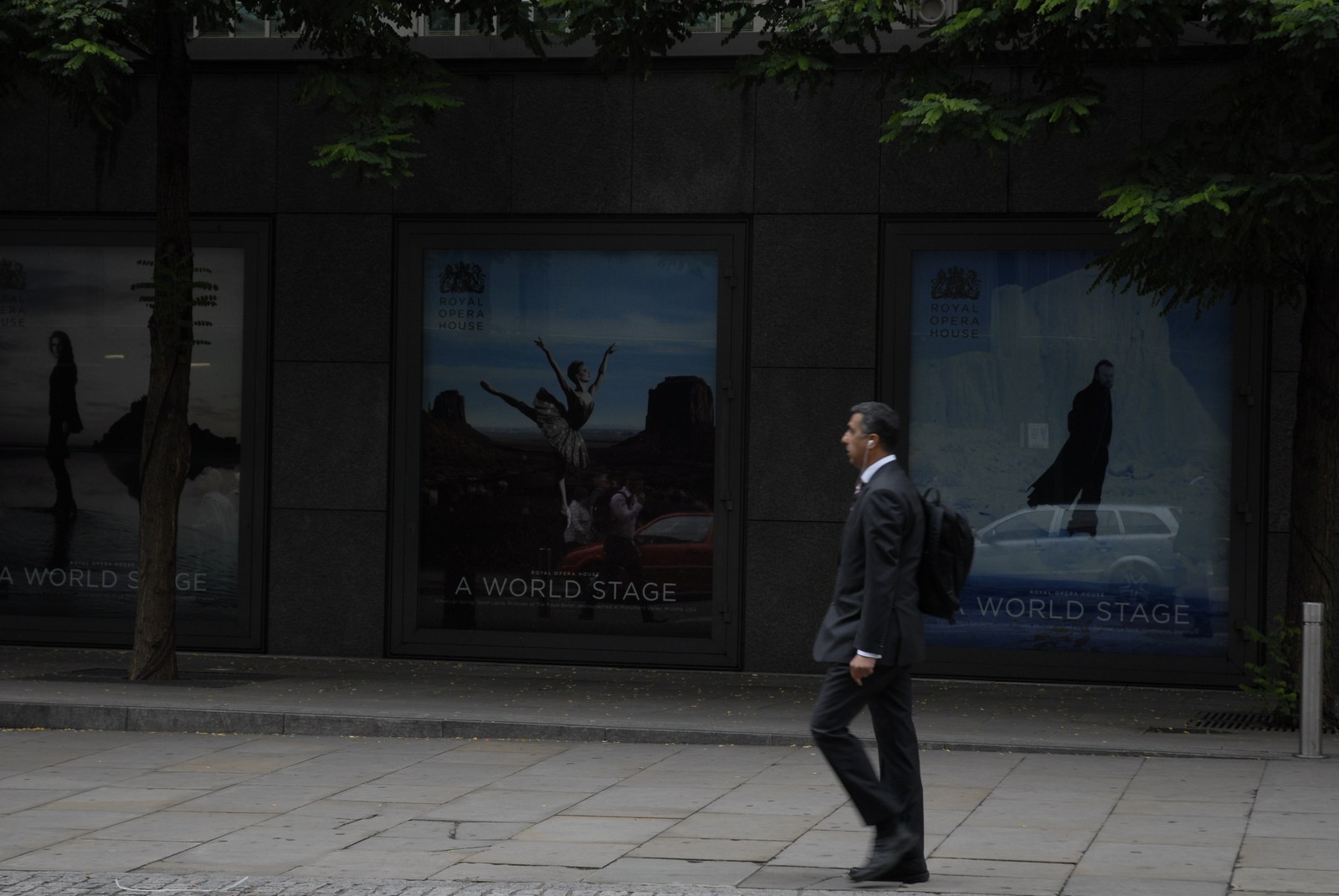
A World Stage, 2011
Impression numérique sur papier photographique, 5 × (60 × 40 cm)Digital print on photographic paper, 5 × (60 × 40 cm)
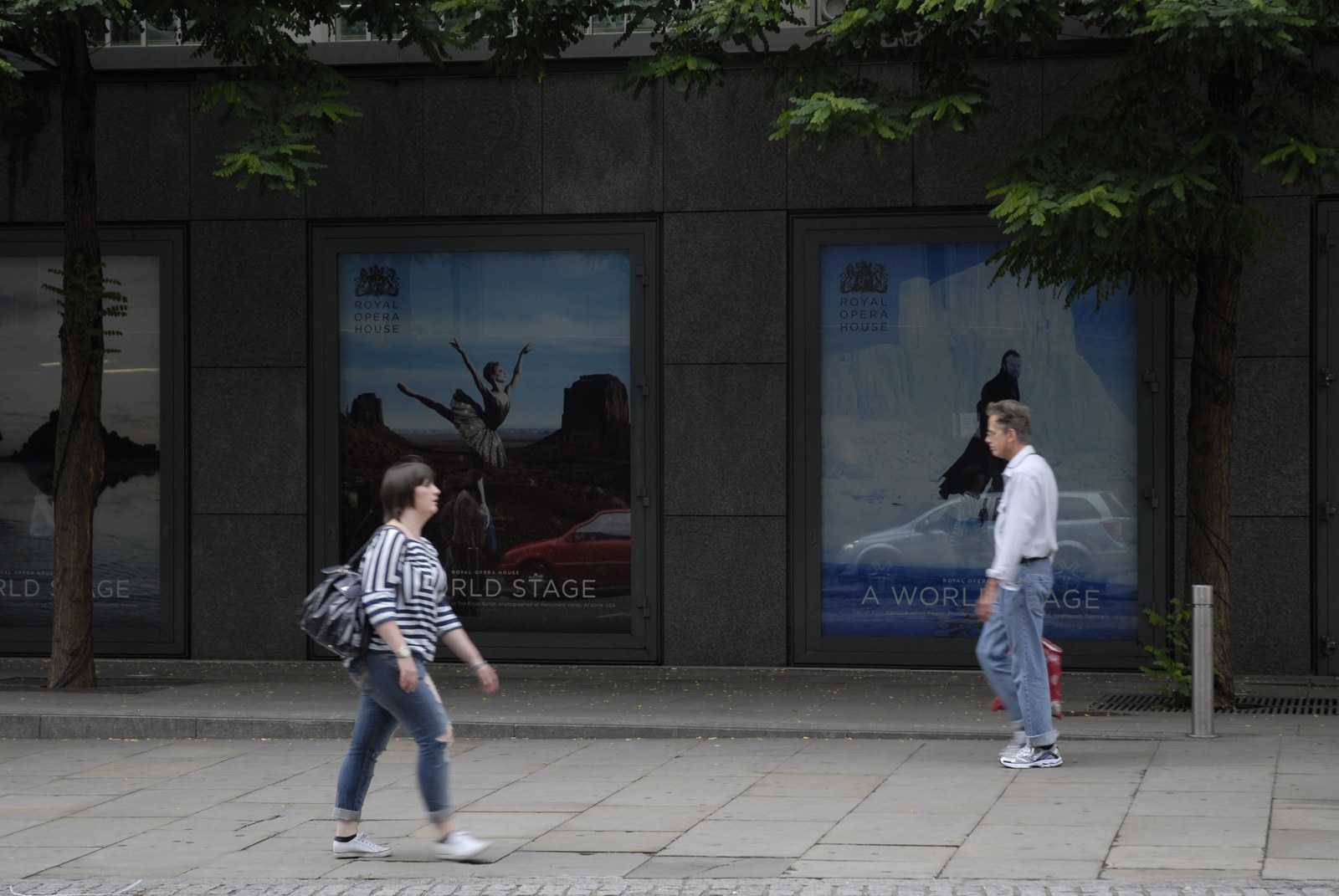
Sur une façade de granit noir, des affiches rétroéclairées. Une danseuse bondit au milieu d'un désert aride ; une autre silhouette se tient au bord d'un rivage de glace. En bas de chaque image, une ligne : A WORLD STAGE. C'est une campagne d'affichage du Royal Opera House de Londres. La maison d'opéra prend le monde pour théâtre, les paysages pour scène.
Devant les affiches, une femme traverse le cadre, sac au dos. Ailleurs, un homme en costume passe, la tête ailleurs. Ni l'un ni l'autre ne regarde. Mais cadrés là, à la même hauteur que les danseurs, ils tiennent la pose sans le savoir.
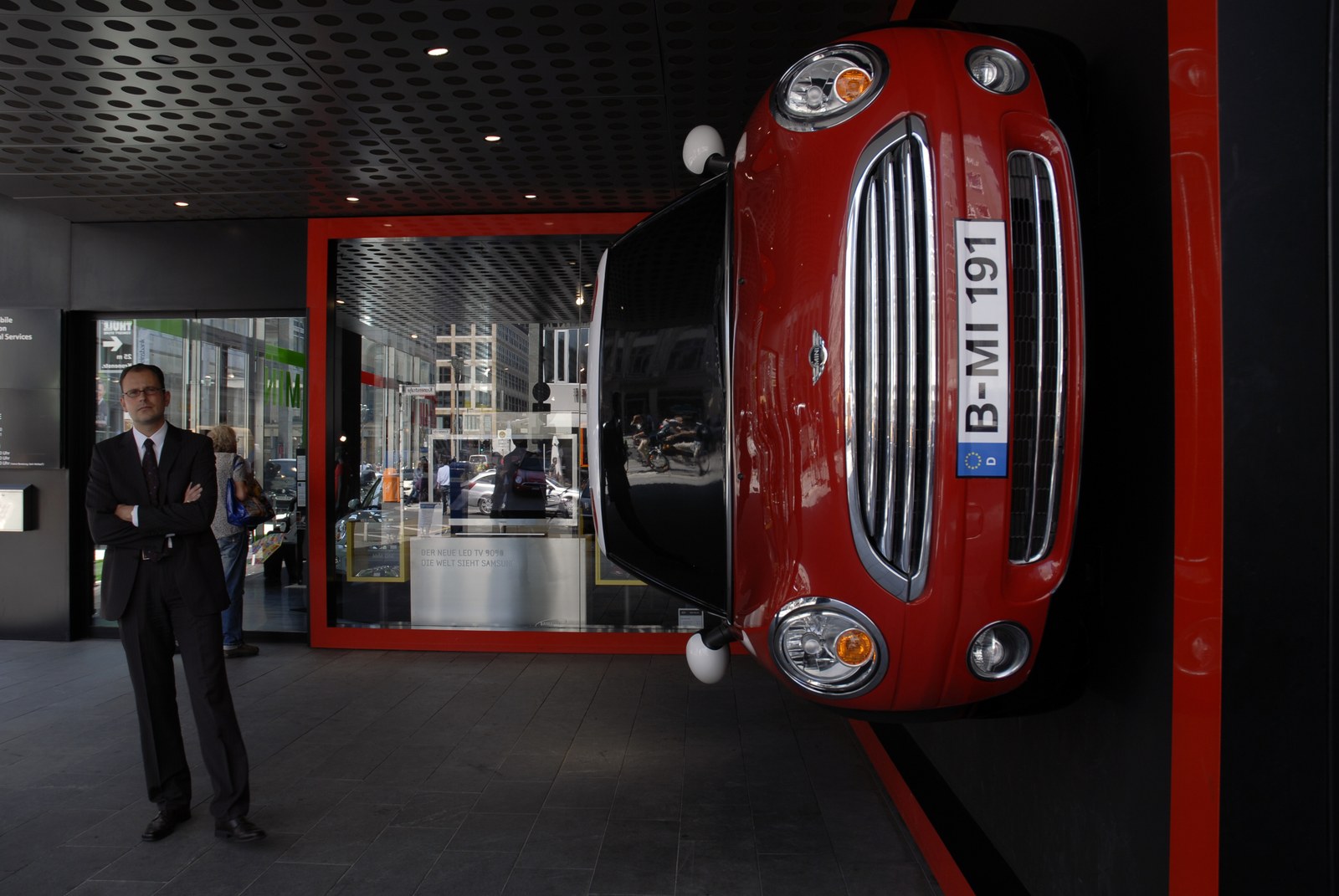
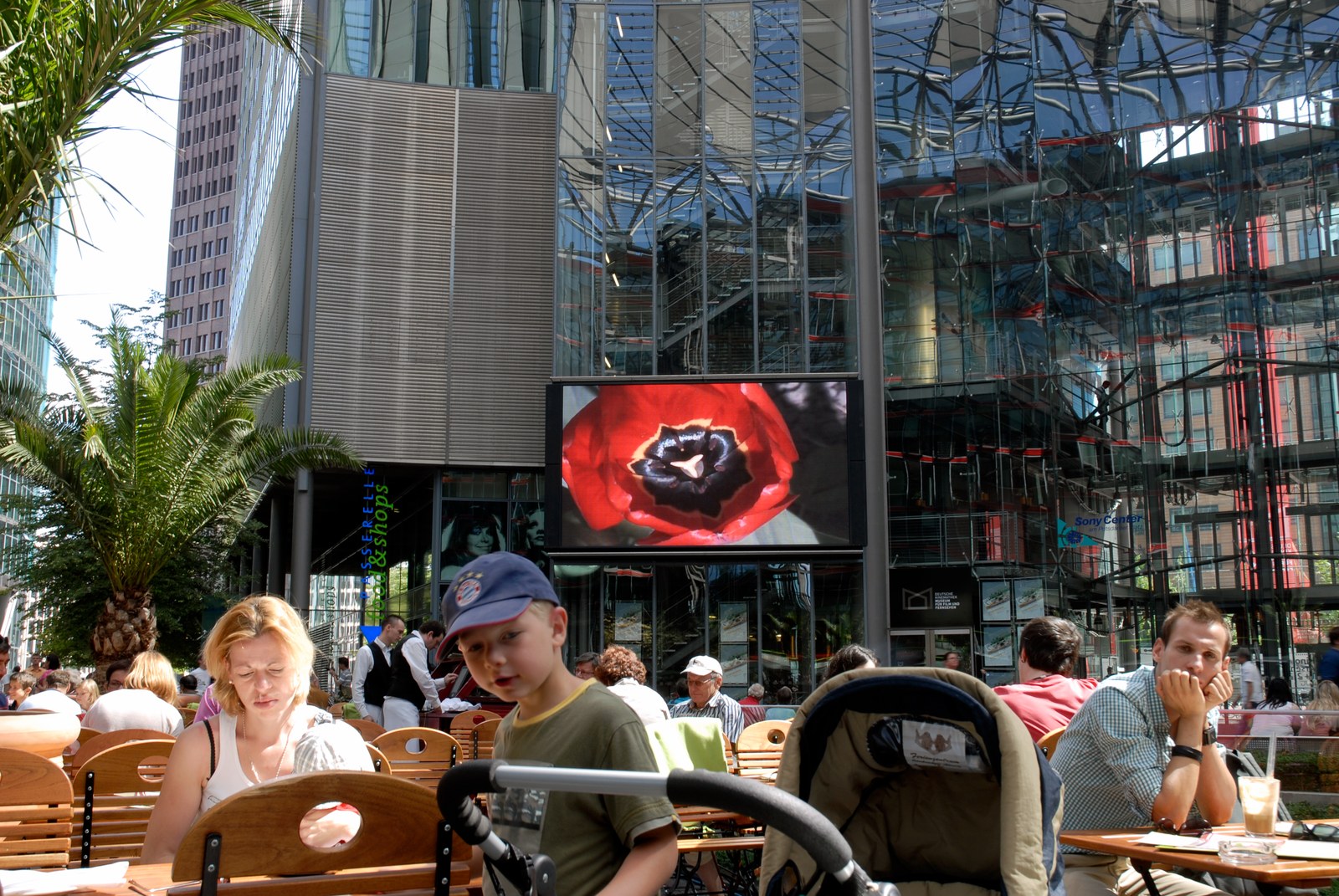
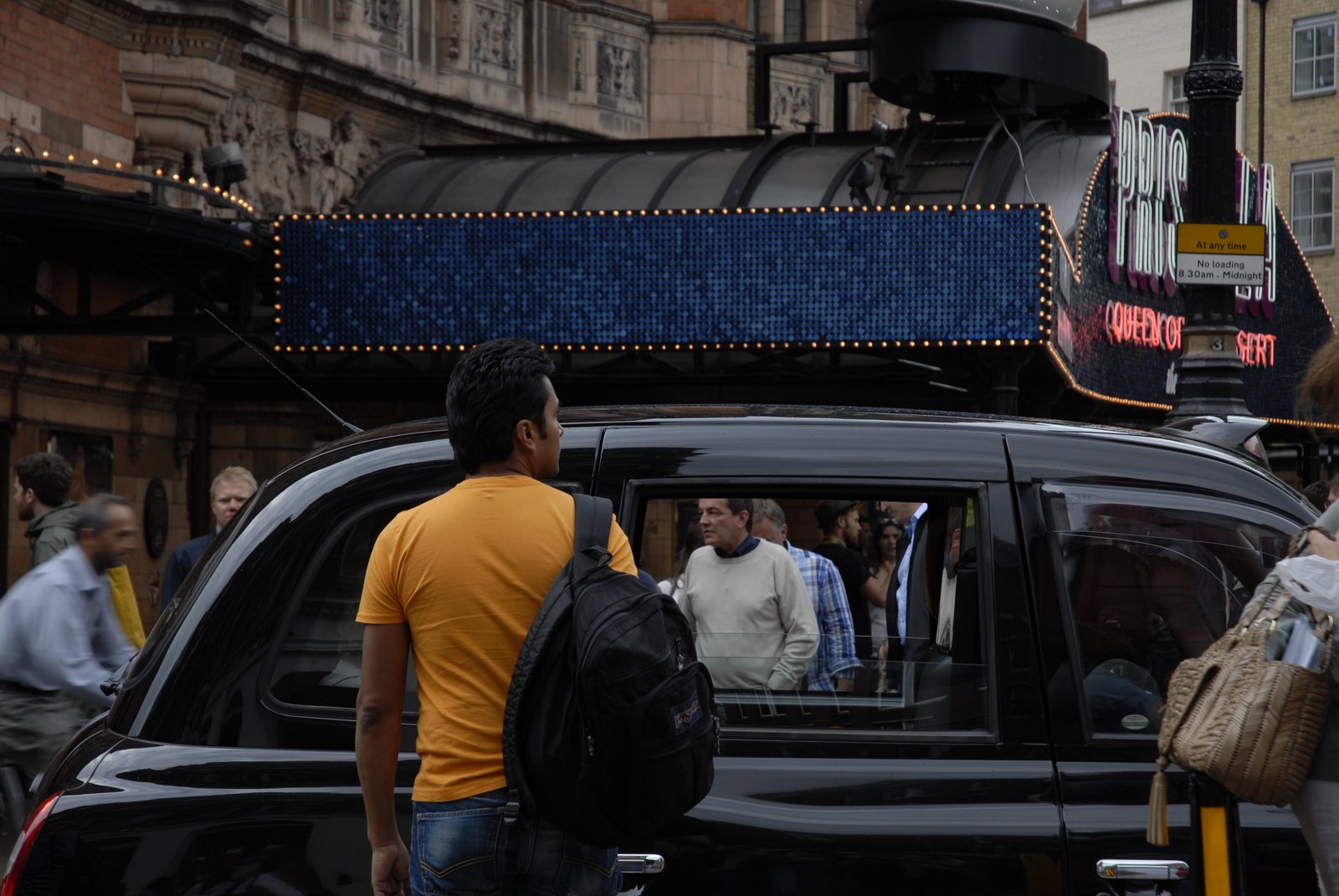
Ces deux images ouvrent et referment la série. Entre elles, trois photographies — elles auraient pu être prises dans n'importe quelle capitale européenne. Une voiture rouge fixée à la verticale sur un mur noir, roues dans le vide, plaque à hauteur des yeux ; devant elle, un homme en costume attend, bras croisés, sans la regarder. Des vitrines qui redoublent la rue par réflexion. Des écrans allumés.
Le cadrage est frontal, la distance moyenne, la lumière celle du jour. La photographie ne théâtralise pas la scène : elle constate que la scène est déjà montée, et que le titre a été écrit par la ville elle-même.
Ce qui tient la série, c'est l'écart entre le décor et les gens. Les passants ne sont ni dupes ni complices. Ils marchent, attendent, regardent ailleurs. Le décor est monté pour eux, personne ne leur a demandé de jouer — et pourtant, dans le cadre, un jeu se compose.
Backlit posters on a black granite façade. A dancer leaps in the middle of an arid desert; another figure stands on an icy shore. At the foot of each image, one line: A WORLD STAGE. It is an advertising campaign for London's Royal Opera House. The opera house takes the world for its theatre, the landscapes for its stage.
In front of the posters, a woman crosses the frame with a rucksack. Elsewhere, a man in a suit walks past, his mind somewhere else. Neither of them looks. But framed there, at the same height as the dancers, they hold the pose without knowing it.
These two images open and close the series. Between them, three photographs — they could have been taken in any European capital. A red car bolted vertically to a black wall, wheels in mid-air, number plate at eye level; in front of it a man in a suit waits, arms folded, not looking at it. Shop windows doubling the street back at itself. Screens left on.
The framing is frontal, the distance middling, the light plain daylight. The photograph doesn't stage the scene. It notes that the scene is already staged — and that the title was written by the city itself.
What holds the series together is the gap between the set and the people. Passers-by are neither fooled nor complicit. They walk, they wait, they look elsewhere. The set was built for them, nobody asked them to perform — and yet, inside the frame, a performance composes itself.